
Agriculture, Technology
Rainwater harvesting, water reuse among DOST-7’s El Niño preps
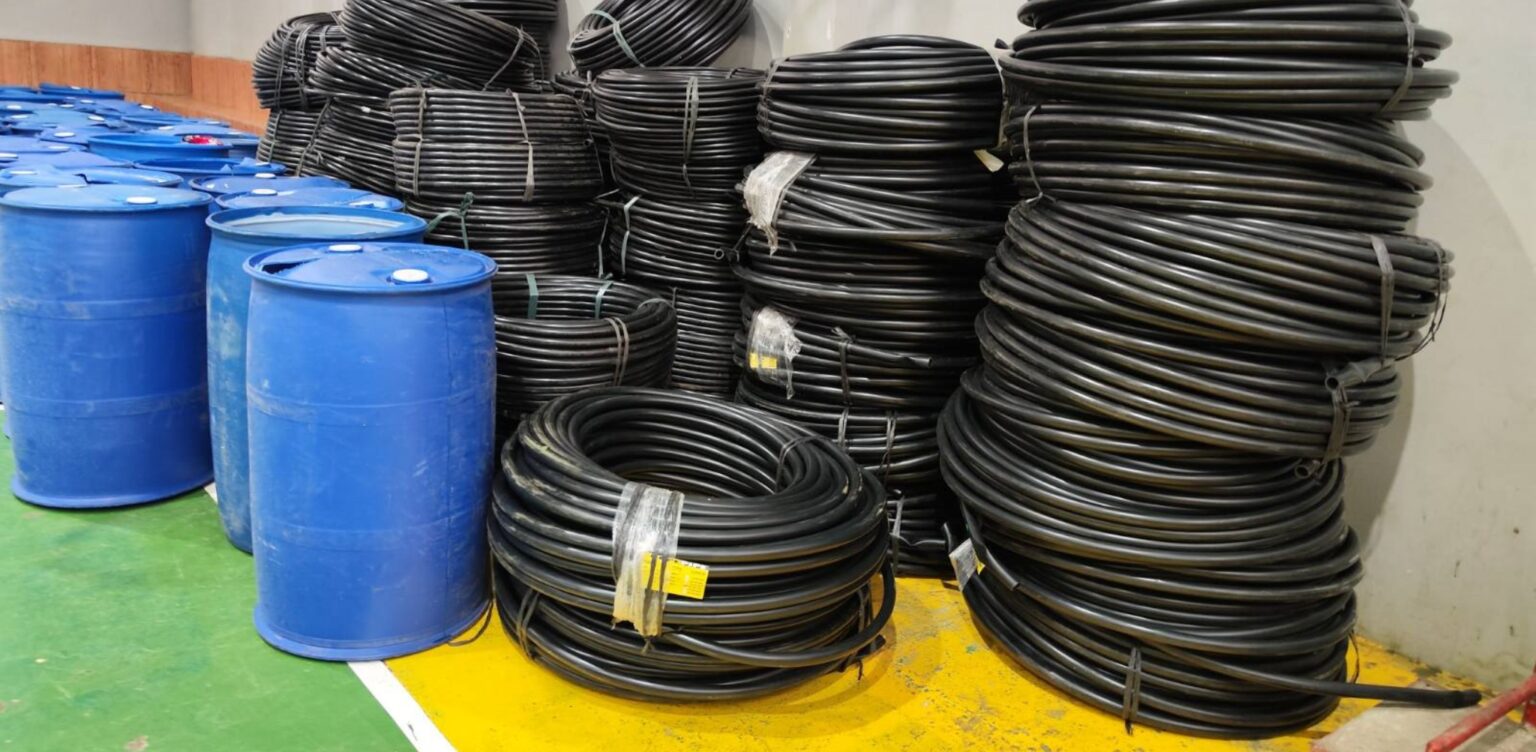
According to the city’s information office (PIO), among the equipment distributed were hose, water drums, pond liner, pump, feeds, and vitamins for the farm animals. | Courtesy of Cebu City PIO/REYPAS
LAPU-LAPU CITY, Cebu — The Department of Science and Technology in Central Visayas (DOST-7) is promoting rainwater harvesting and wastewater reuse as part of its El Niño preparations, which threaten to reduce water availability in Cebu.
DOST-7 Regional Director Tristan Abando said the agency is working with local government units (LGUs) on water-related technologies, agricultural risk mapping, and other measures to prepare for prolonged dry conditions.
Collecting rainwater, reusing wastewater
One of the measures involves collecting and treating rainwater for uses that do not require drinking-quality water.
“We can collect stormwater or even floodwater, and we can treat it and use it maybe for non-potable use,” Abando said in a news forum on Tuesday, October 13.
On Wednesday, October 14, DOST-7 and its partners launched a containerized membrane bioreactor wastewater treatment demonstration plant in Lapu-Lapu City.
The facility can treat up to 50,000 liters of wastewater daily using Korean membrane technology that combines biological treatment and fine filtration to remove pollutants.
The project involves South Korea-based HifilM Inc., Suki Trading Corporation, Vic Metal Fabrication and Environmental Services Inc., and the Korea Environmental Professional Engineers Association.
Household, community, and LGU measures
DOST-7 is also working with the Lapu-Lapu City government on “Sawra ang Ulan,” an initiative to help communities and barangays design smaller rainwater harvesting systems.
The approach is intended to give communities an alternative to larger installations, which may require more substantial investment.
Moreover, DOST-7 plans to support community-level water projects through its Community Empowerment through Science and Technology (CEST) program, which provides grants for interventions involving communities, barangays, LGUs, and nongovernment organizations.
For broader interventions, the agency is working with Lapu-Lapu and Mandaue cities through its Smart and Sustainable Communities Program (SSCP) to explore wastewater treatment and reuse.
DOST-7 is also promoting small-scale desalination facilities, although Abando said these require higher maintenance and assessments of water salinity to determine their suitability.
Another technology under consideration is the Safe Water Treatment System (SAFEWTRS), a mobile emergency disinfection facility designed to treat suitable water sources for drinking.
Abando said DOST-7 is deploying one unit in Medellin, northern Cebu, for water treatment.
Mapping agricultural risks
Aside from water-related technologies, DOST-7 has been mapping agricultural areas in Cebu and Bohol through Project SARAI, or Smarter Approaches to Reinvigorate Agriculture as an Industry in the Philippines.
The project uses smart farming technologies to gather information on agricultural conditions and help LGUs identify areas that may be vulnerable to prolonged dry periods.
Abando said initial assessments suggest that elevated agricultural areas with limited water supplies could face greater risks, although vulnerability varies depending on local conditions.
“We have specific risk maps for different areas in Cebu, and we’re trying to distribute that to our local government units to provide them guidance in terms of decisions, what are the actions and measures to do,” Abando said.
The agency is working with LGUs and the University of the Philippines Los Baños to refine the maps by incorporating additional factors, including available water sources and soil moisture.
Abando said DOST-7 is also reviewing local governments’ environmental development plans, including their agriculture and irrigation priorities, to identify where science and technology could be applied.
“We have been reviewing their environmental development, part of [which] would be agriculture, and we are infusing science, technology, and innovation,” Abando said.
Implementation timeline, rainfall outlook
Abando said DOST-7 was targeting the first quarter of 2027 for its El Niño–related measures, with implementation estimated at around 50 percent at the time of the forum.
The agency aims to complete its broader SSCP interventions by 2028, while continuing to coordinate with LGUs and other agencies on water security and climate preparedness.
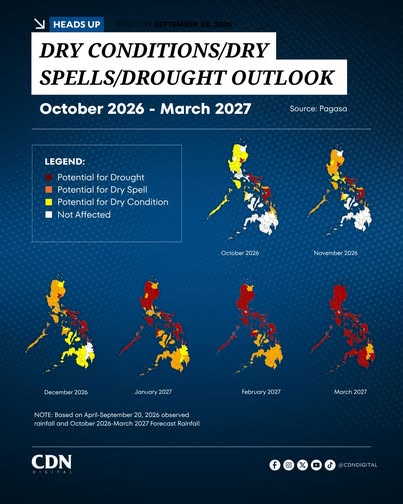
The preparations come as the Philippine Atmospheric, Geophysical and Astronomical Services Administration (Pagasa) monitors a strengthening El Niño that could bring reduced rainfall to parts of the country.
Pagasa’s climate outlook indicates that Cebu could experience dry conditions in December 2026, followed by a dry spell in January and February 2027, before reaching drought conditions in March.
Help this knowledge grow
Have additional information, a correction, or a supporting resource for this article?
Try the form and preview your contribution. Nothing is submitted or saved. Closing the form or leaving this page clears your draft.