
Agriculture, Education, Industry and Business
Stitching futures: Weaving a new story for Philippine textiles
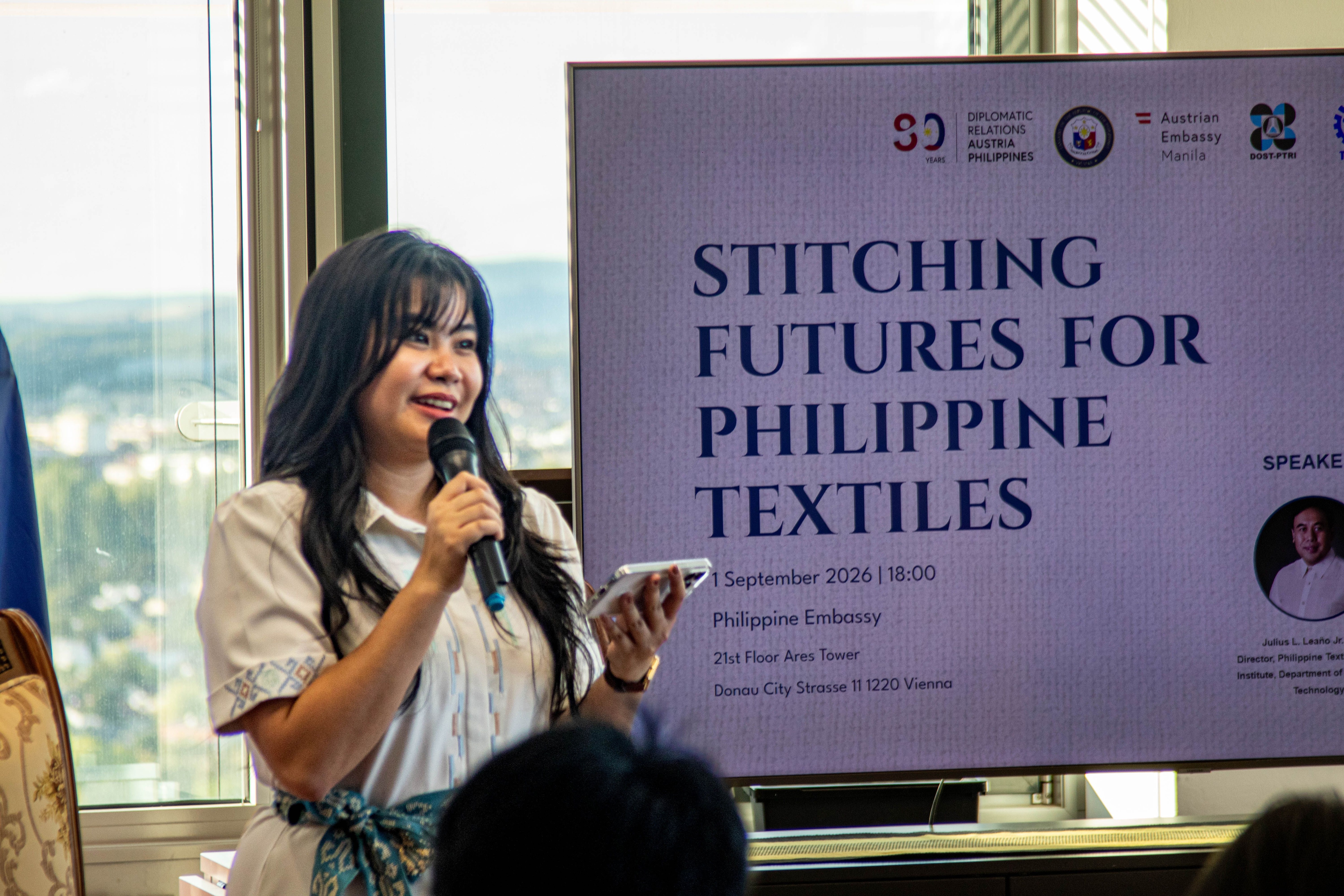
The Philippine Embassy in Vienna and the Austrian Embassy in the Philippines recently organized a lecture titled 'Stitching Futures for Philippine Textiles.' Photo courtesy of Harold Khan
VIENNA, Austria — What looks like a piece of fabric can carry generations of knowledge.
A thread can tell the story of a community. A natural dye can connect a textile to the land. And a handwoven piece can represent not just Filipino culture, but the livelihood of the person who made it.

These ideas took center stage at “Stitching Futures for Philippine Textiles,” a lecture organized by the Philippine Embassy in Vienna and the Austrian Embassy in the Philippines, which brought together voices from the worlds of textile-making, skills development, design, and sustainability.
Among the speakers were Director Julius Leaño of the Philippine Textile Research Institute, Department of Science and Technology who discussed the value and potential of Philippine textiles; Nelly Nita Dillera, TESDA Deputy Director General, who highlighted skills development and entrepreneurship; and CEO Anna Lagon, who shared perspectives on Filipino design, sustainability, and the journey toward zero waste.
The lecture went beyond the familiar appreciation of telang Pinoy. Participants were introduced to raw fibers, traditional weaving techniques, and natural pigments made from materials such as atsuete, cogon, and talisay.
Because, as the discussion emphasized, Philippine textiles are not simply “tela-tela lang.” There is science behind them.
There is also livelihood. Initiatives involving fiber upcycling, SalinHabi, and Mananahi ng Barangay show how traditional skills can create opportunities for communities while keeping cultural knowledge alive.
Leaño offered a pointed reminder about the value of Filipino craftsmanship: “Philippine textile is expensive, yes, because Filipinos are not cheap.”
The price reflects more than the material. It reflects time, skill, patience, and knowledge passed down through generations.
For Dillera, skills development must go beyond preparing people for jobs. It should also open doors to entrepreneurship.
With more than 4,000 training institutions across the Philippines, TESDA helps ensure that Filipinos can develop skills that can lead not only to employment but to sustainable livelihoods.
For traditional crafts, this becomes even more important. Programs recognizing master artisans, including the Gawad sa Manlilikha ng Bayan, help document skills that might otherwise disappear — and make it possible for these traditions to be passed on to another generation.
The challenge is simple, yet significant: Preserve. Transfer. Innovate. Prosper.
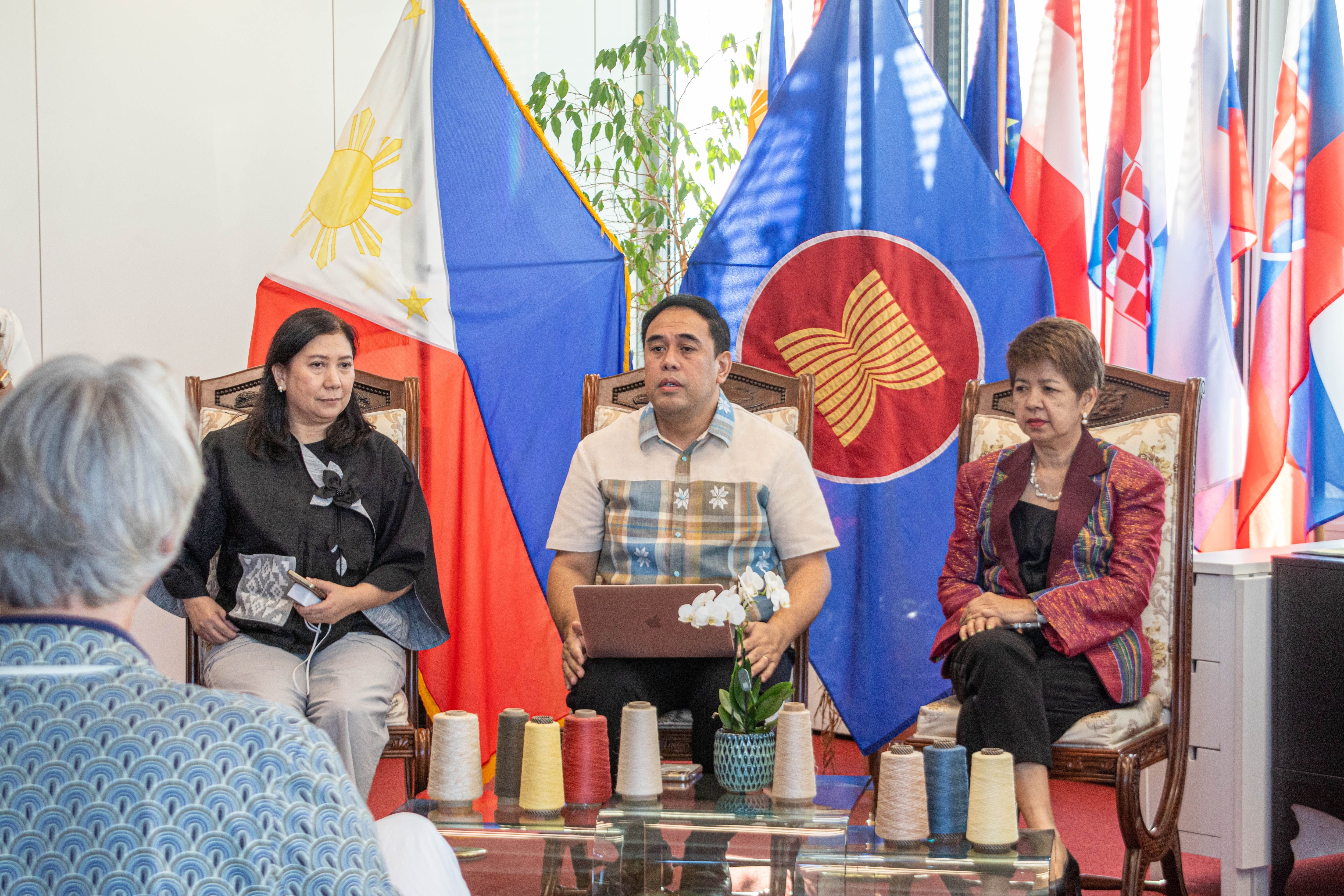
For Lagon, Filipino fashion should be reflective of Philippine culture rather than an imitation of others.
It should also be conscious of what happens after a garment has served its purpose.
One question that led to finding such conscious endeavor came from Lagon's own child: What happens to what we leave behind?
It became part of a journey toward zero waste, from choosing better materials to finding new uses for discarded ones.
Among its initiatives are upcycled bags, one such product was made from retired military uniforms, proving that some preloved items can still have another life and chance to be loved.
Interestingly, the question of what happens to what we leave behind came full circle. Alyssa, who was only 11 when she first asked her mother that question, is now Creative Partnership Lead for their company. When asked if she had already found the answer, she simply said, “It’s an ongoing process.” Finding that answer is not about arriving at a perfect solution, but about continuing to learn, rethink, and find better ways to create, with greater awareness of what we use, what we make, and what we leave behind.
Ultimately, Stitching Futures was not simply a conversation about textiles but a conversation about people — about the weaver whose skills were inherited from generations before; the learner who may turn craftsmanship into a livelihood: the designer looking for more responsible ways to create; and the young generation asking what kind of world we leave behind.
Philippine textiles are rooted in tradition, but their story does not have to end there.
Help this knowledge grow
Have additional information, a correction, or a supporting resource for this article?
Try the form and preview your contribution. Nothing is submitted or saved. Closing the form or leaving this page clears your draft.